Top Features to Look for in a Meat Cutting Machine
In the food processing and meat industry, efficiency, precision, and hygiene are crucial. A high-quality Meat Cutting Machine can significantly improve productivity while ensuring consistent cuts and reducing manual effort. Whether you run a butcher shop, restaurant, or large-scale processing unit, choosing the right machine requires understanding the key features that matter most.
Why Investing in the Right Meat Cutting Machine Matters
A reliable Meat Cutting Machine not only speeds up operations but also enhances safety and reduces wastage. It ensures uniform cuts, improves presentation, and maintains hygiene standards, which are essential for customer satisfaction and compliance with food safety regulations.
1. Cutting Capacity and Power
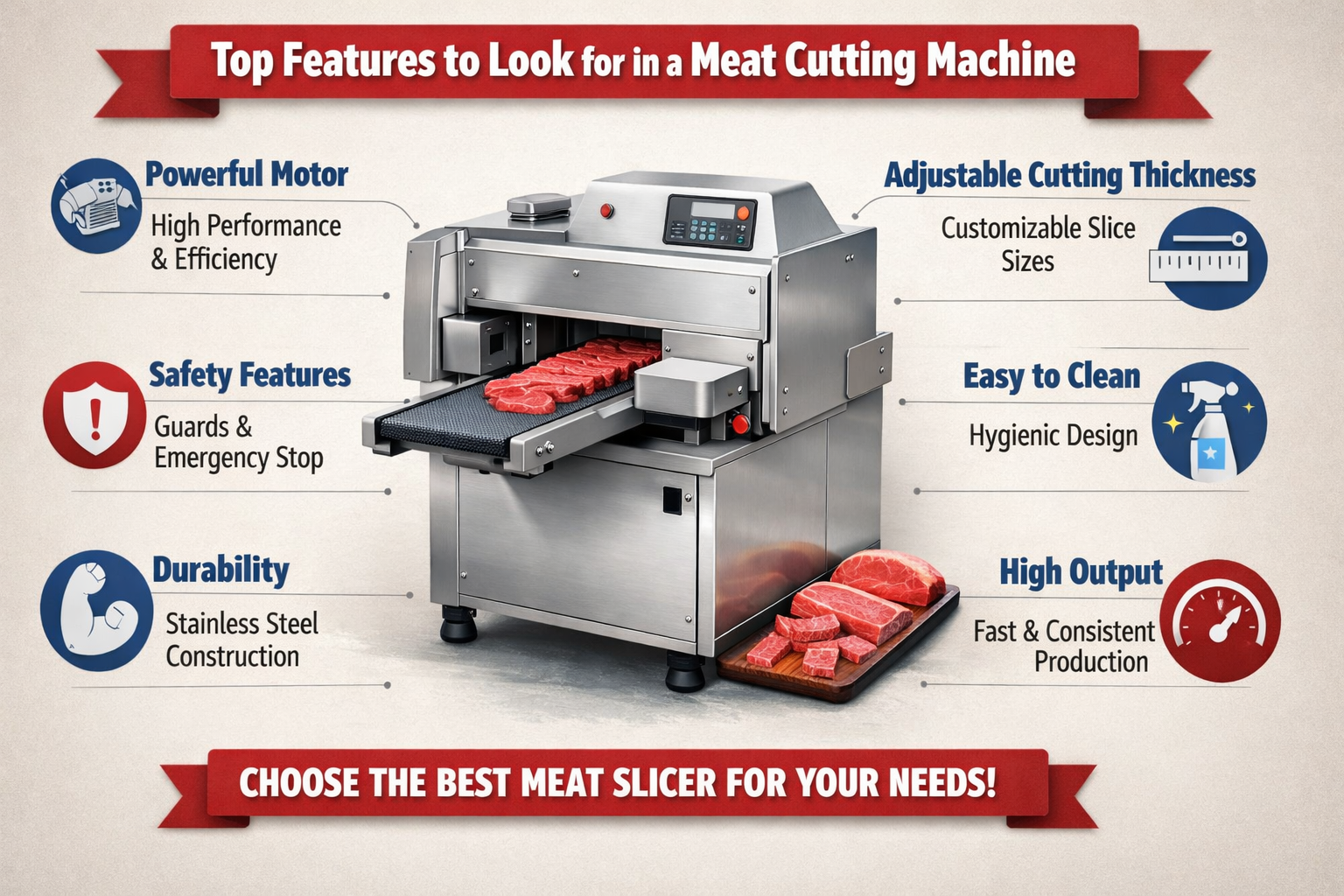
One of the first features to consider in a Meat Cutting Machine is its cutting capacity and motor power. Machines with higher horsepower can handle tough and frozen meat more efficiently. If you deal with large volumes daily, opt for a machine with a powerful motor and high output capacity.
2. Blade Quality and Sharpness
The blade is the heart of any Meat Cutting Machine. High-quality stainless steel blades ensure precise and clean cuts. Look for machines with durable, rust-resistant blades that retain sharpness over time and are easy to replace or sharpen.
3. Build Quality and Durability
A robust and durable Meat Cutting Machine is essential for long-term use. Machines made from food-grade stainless steel not only last longer but also resist corrosion and are easy to clean, ensuring better hygiene.
4. Safety Features
Safety should never be compromised when using a Meat Cutting Machine. Look for features such as:
- Blade guards
- Emergency stop buttons
- Non-slip feet
- Automatic shut-off
These features protect operators and reduce the risk of accidents in busy environments.
5. Ease of Cleaning and Maintenance
Hygiene is critical in meat processing. A Meat Cutting Machine with detachable parts and smooth surfaces makes cleaning easier and prevents bacterial buildup. Regular maintenance also ensures consistent performance and longer machine life.
6. Versatility and Cutting Options
Modern Meat Cutting Machine models offer multiple cutting options, allowing you to slice, dice, or chop meat into different sizes. This versatility is especially useful for businesses that handle various types of meat products.
7. Size and Space Requirements
Before purchasing a Meat Cutting Machine, consider the available space in your workspace. Compact machines are ideal for small shops, while larger industrial machines are better suited for high-volume production units.
8. Energy Efficiency
Energy consumption is an important factor, especially for businesses operating continuously. Choosing an energy-efficient Meat Cutting Machine can help reduce operational costs without compromising performance.
9. Noise Levels
Some machines can be quite noisy, which may not be suitable for smaller setups. Opt for a Meat Cutting Machine designed with noise-reduction features to ensure a more comfortable working environment.
10. Price and Warranty
While price is an important consideration, it’s essential to balance cost with quality. A slightly higher investment in a premium Meat Cutting Machine often results in better durability and performance. Also, check for warranty and after-sales support to ensure peace of mind.
Conclusion
Choosing the right Meat Cutting Machine involves evaluating several factors, including power, blade quality, safety, and ease of maintenance. By focusing on these essential features, you can select a machine that meets your operational needs and enhances productivity. A well-chosen Meat Cutting Machine not only improves efficiency but also ensures consistent quality and safety, making it a valuable investment for any food-related business.
