Top Maintenance Tips to Extend the Life of Your Meat Tumbler
A Meat Tumbler is an essential piece of equipment in any meat processing setup, whether for small butcher shops or large-scale food production units. It helps in improving flavor absorption, tenderness, and overall product consistency by evenly mixing marinades and seasonings into the meat.
However, like any other high-performing machinery, proper maintenance is key to ensuring your Meat Tumbler delivers consistent results and lasts for years. Neglecting cleaning or upkeep can lead to contamination, mechanical wear, and reduced efficiency. In this guide, we’ll explore practical maintenance tips to extend the life and performance of your Meat Tumbler.
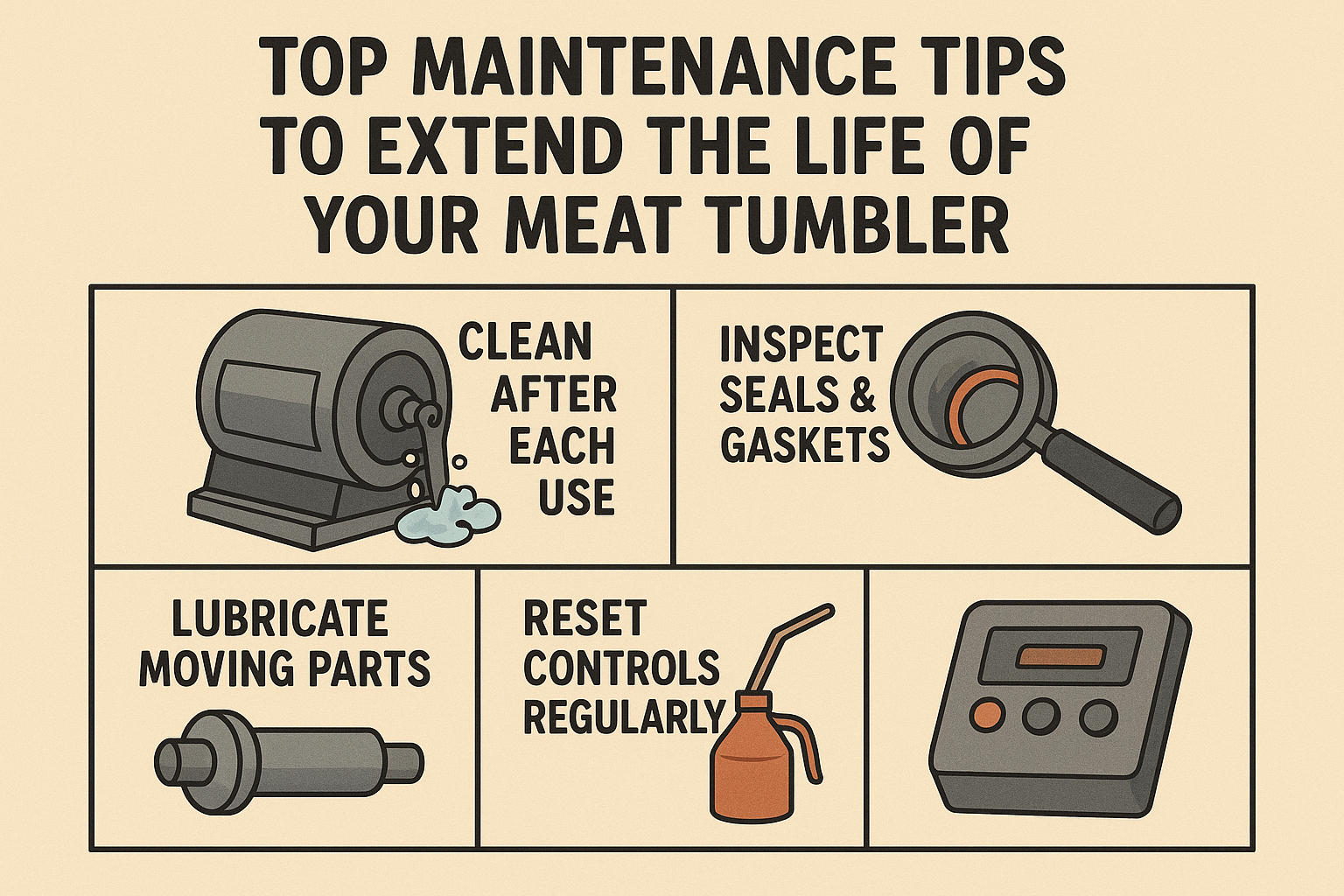
1. Clean the Meat Tumbler After Every Use
One of the most important rules for maintaining a Meat Tumbler is thorough cleaning after each batch. Meat residue, seasoning, and marinade can build up inside the drum, leading to bacterial growth and equipment corrosion.
- Tip: Use warm water and a mild, food-grade detergent to clean all internal and external surfaces.
- Pro Tip: Avoid using harsh chemicals that can damage stainless steel surfaces.
- Bonus: Disassemble removable parts for deeper cleaning and ensure all seals are properly dried before reassembly.
2. Inspect Seals and Gaskets Regularly
The seals and gaskets of your Meat Tumbler play a critical role in maintaining a vacuum environment. If these parts become worn or cracked, they can lead to leaks and reduced performance.
- Maintenance Step: Check the condition of gaskets and O-rings weekly.
- Replace: Any component that shows signs of damage or wear to ensure consistent vacuum sealing.
- Why It Matters: Proper vacuum levels help achieve better marination and meat texture.
3. Lubricate Moving Parts
A Meat Tumbler includes rotating shafts, bearings, and gears that need regular lubrication to function smoothly. Lack of lubrication can cause friction, resulting in noise, overheating, and mechanical failure.
- Use: Only food-safe lubricants recommended by the manufacturer.
- Frequency: Monthly lubrication is generally sufficient for moderate use; however, increase it for heavy-duty commercial operations.
- Note: Over-lubrication can also attract dust and residue — keep it balanced.
4. Check Electrical and Control Components
For automated or vacuum meat tumblers, electronic controls and sensors ensure precise tumbling times and pressure settings.
- Action Plan: Inspect all electrical connections, control panels, and switches periodically.
- Clean: Dust and moisture can interfere with control accuracy, so keep the panel area dry and covered when not in use.
- Safety Reminder: Always disconnect power before performing maintenance.
5. Monitor the Vacuum System Performance
In a vacuum Meat Tumbler, the vacuum pump and related components must function efficiently to ensure consistent results.
- Step 1: Check vacuum pressure readings before each operation.
- Step 2: If pressure drops frequently, inspect hoses and valves for leaks.
- Step 3: Replace filters and oil in the vacuum pump as per the manufacturer’s schedule.
Proper vacuum ensures deeper marinade penetration and better meat tenderness.
6. Store the Meat Tumbler Properly
When not in use, the Meat Tumbler should be stored in a clean, dry, and covered space to avoid moisture buildup and dust accumulation.
- Avoid: Storing near water sources or in humid environments.
- Tip: Keep the lid slightly open to allow air circulation and prevent odor buildup.
Proper storage prevents rusting and maintains the overall integrity of the machine.
7. Schedule Professional Servicing
Even with routine care, your Meat Tumbler needs professional servicing at least once a year.
- Reason: Technicians can inspect internal components, electrical systems, and vacuum performance more thoroughly.
- Outcome: Prevents costly breakdowns and extends machine lifespan.
Conclusion
A Meat Tumbler is a long-term investment that plays a vital role in achieving consistent meat quality, flavor, and texture. Regular cleaning, lubrication, inspection, and timely servicing are essential for its longevity and performance. By following these maintenance tips, you not only protect your investment but also ensure hygiene, safety, and efficiency in every batch you process.
